
A stroke is a medical emergency and one-off (sometimes repeated) event that can lead to long-term changes in movement, speech, cognition, mood etc. The effects are usually dependent on the affected area of the brain.
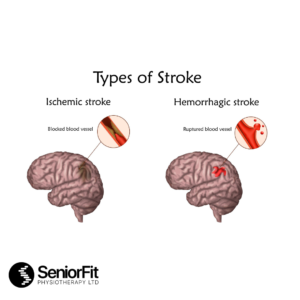
The brain is the control center of the body. Once the blood supply is reduced or interrupted in any area, it can lead to the death of the brain cells, and the cessation of functions carried out by that area.
Symptoms of a stroke.
It is easy to spot its symptoms with the acronym developed by the American Heart Association (AHA), which is “FAST.”
- Face drooping
- Arm weakness
- Speech difficulty
- Time to call for help! In Lagos, please call the Lagos State Emergency Response or Emergency Response Africa on +234 800 0225 5372
Other symptoms to take note of include confusion, acute weakness of body parts, loss of sensation, partial loss of vision, double vision, difficulty speaking or understanding and balance issues
Important things to note about a stroke
- A stroke is also called a Cerebrovascular Accident (CVA) but is never a partial stroke.
- People at risk include those with high blood pressure, high cholesterol, Diabetes Mellitus etc.
- Research has shown that the incidence of Stroke is higher in males than females in all age groups. But because women have a longer life expectancy, there are more stroke events in women than men.
- While genetic factors can play a role in stroke incidences, lifestyle choices can increase or reduce the risk.
- Strokes can be prevented with healthy lifestyle choices like controlling blood pressure, eating healthy meals, maintaining a healthy weight and regular exercise.
- The prognosis and recovery depend on the location of the injury and when treatment begins.
- A stroke can lead to permanent disability or death if not properly managed.
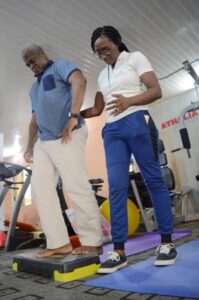
Life after a stroke
- Life after a stroke can be long and challenging both for the individual and the family.
- Interestingly, you can’t compare the recovery of others with yours.
- Recovery is based on the severity, area of the brain affected, speed and quality of medical care and the individual’s health before and after the incidence.
- While recovery can last from weeks to months, lifestyle changes are essential, i.e. physical, social and emotional aspects of life.
- Recovery, rehabilitation and lifestyle changes will be dependent on the individual symptoms.
- These symptoms can include weakness, trouble chewing and swallowing, bowel and bladder dysfunctions, depression, difficulty controlling or expressing emotions, speech difficulty, a problem with thinking, awareness, attention, learning, judgement and memory etc.
- Rehabilitation also involves the prevention of a future stroke incidence. This is why it is important to be drug compliant.
At SeniorFit, we are a team of healthcare professionals interested in the rehabilitation of the elderly after Stroke. Our team comprises Doctors, Physiotherapists, Speech Therapists and Dieticians and is increasing to serve you better.
For more information about Stroke and the rehabilitation process, contact us via our social media platforms or email info@seniorfit.ng.
Written by Temiloluwa
